
Episode 7: The Age of Men
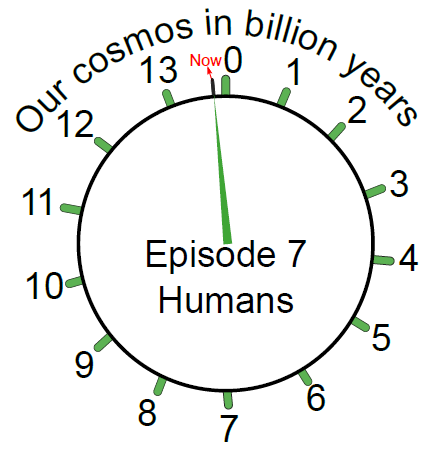
Biodiversity and the global climate have greatly varied ever since the planet came into existence. But until now changes in either have occurred gradually or, when they were sudden, they were initiated by cataclysmic events such as large meteoritic impacts or periods of tremendous volcanic activity.
300.000 years after the first Homo sapiens evolved, things look different. A single animal species, through their behaviour and their growing population reaching over 7 billion people today, exerts a much larger influence than any other on both the planet’s biodiversity and its global climate. The industrial civilisation is changing the Earth’s climate in a way that is harmful to many living species, including humans themselves.
Climatic changes, profound land use changes and environmental pollution have visibly affected ecosystems and biodiversity on the global scale. These changes are so disruptive that a new epoch, the “Anthropocene”, has been proposed to qualify the period we live in.
Increased concentrations of greenhouse gases, like CO2, are the primary cause for the recent increase of average air temperatures, ocean warming, Arctic sea ice retreat and sea level change. It is our collective intelligence that has allowed us to develop the technology resulting in greenhouse gas accumulation. Yet it has become clear that right now we need to mobilise our intelligence to minimize the impact of climate change.
Mitigating the rise in temperature to 1.5°C would minimize the impact of the inevitable future climate change. This can be achieved if we severely cut down our greenhouse gas emissions, by reducing energy consumption and making a transition to sustainable energy sources. We also need to re-think how we eat and move, as food consumption and transportation stand as primary causes of global emissions. Cyclists of the world, unite!