
Extended information on episode 7. The Age of Men
Climate and Life have been interacting for billions of years (see Episode 6). The industrial civilisation is changing the Earth’s climate in many respects that are harmful to all living species, including humans. These changes are so disruptive that a new epoch, the “Anthropocene”, has been proposed to qualify the period we live in. But what are the physical mechanisms affecting the climate? What are the main traits of climate changes? And what can we do about it?
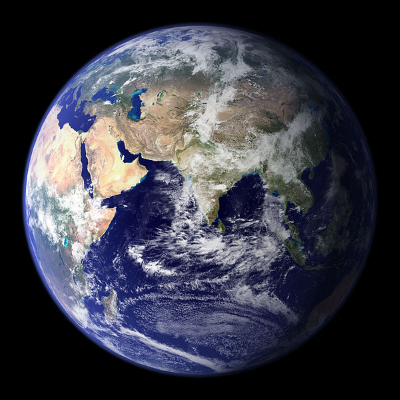
Viewed from space, our Blue Planet looks still, silent and motionless. We know from experience that it is not the case: winds, ocean currents, clouds, storms all participate in a perpetual ballet of weather and climate phenomena that shape our daily lives. What are the driving forces behind these phenomena?
The Earth surface receives most of its energy from the Sun. Part of it is directly reflected back to space while the rest is used to warm the oceans, the land surface and the atmosphere. The spherical shape of our planet implies that energy is unevenly distributed, creating large-scale motions in the atmosphere and the ocean that reorganise that energy globally. This ocean-atmosphere interaction defines our everyday weather.
If energy were steadily accumulating at the surface of our planet, its temperature would rise boundlessly. Fortunately, the Earth has its own safeguard: the warmer it becomes, the more energy it radiates into space. At some point, the Earth reaches radiative equilibrium: it receives as much energy from the Sun as it radiates back into space due to its temperature.
This equilibrium can be perturbed in numerous ways. Rising greenhouse gas concentrations, like carbon dioxide (CO2), is one of them. Greenhouse gases are naturally present in the atmosphere and inhibit the Earth’s radiative heat losses to outer space, by trapping outgoing radiation. Greenhouse gases have been key in the emergence of life on our planet, since temperatures would have been much lower otherwise. In the next episode you will discover why. However, atmospheric CO2 concentrations have been skyrocketing over the last 150 years as a direct consequence of massive fossil combustion related to industrialization. Increased concentrations of greenhouse gases, like CO2, have been identified as the primary cause for the recent increase of average near-surface air temperatures, ocean warming, Arctic sea ice retreat, ice sheet and glacier melt, and ocean acidification among others. These climatic changes, coupled to profound land use changes and environmental pollution, have already visibly affected ecosystems and biodiversity on the global scale.
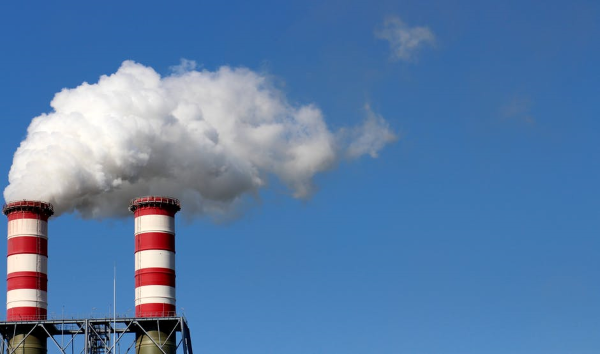
According to experts from the Intergovernmental Panel on Climate Change (IPCC), mitigating the rise in global temperature to 1.5°C above pre-industrial levels would minimize the impact of the inevitable future climate changes. This objective can only be achieved if we are able to severely cut down our greenhouse gas emissions, hence reducing our energy consumption, and substituting fossil fuel-based energy with other sources of energy. The transition to a world free of additional man-made greenhouse gases also requires re-thinking of how we eat and move, as food consumption and transportation stand as primary causes of global emissions.
Life, the most valuable treasure of Earth, has existed for at least 3.5 billion years. We are living a unique period of the Earth’s history, to which we like to refer as the Anthropocene or the Age of Men, in which one of its living species –humans– organised itself so as to produce large-scale environmental and climate disruptions unseen in thousands of years. This influence is so profound that it might postpone the Earth’s next inception in a glacial period by 100 000 years. Yes, the Age of Men is all about that: what is done during a lifetime can have long-lasting consequences on our planet.